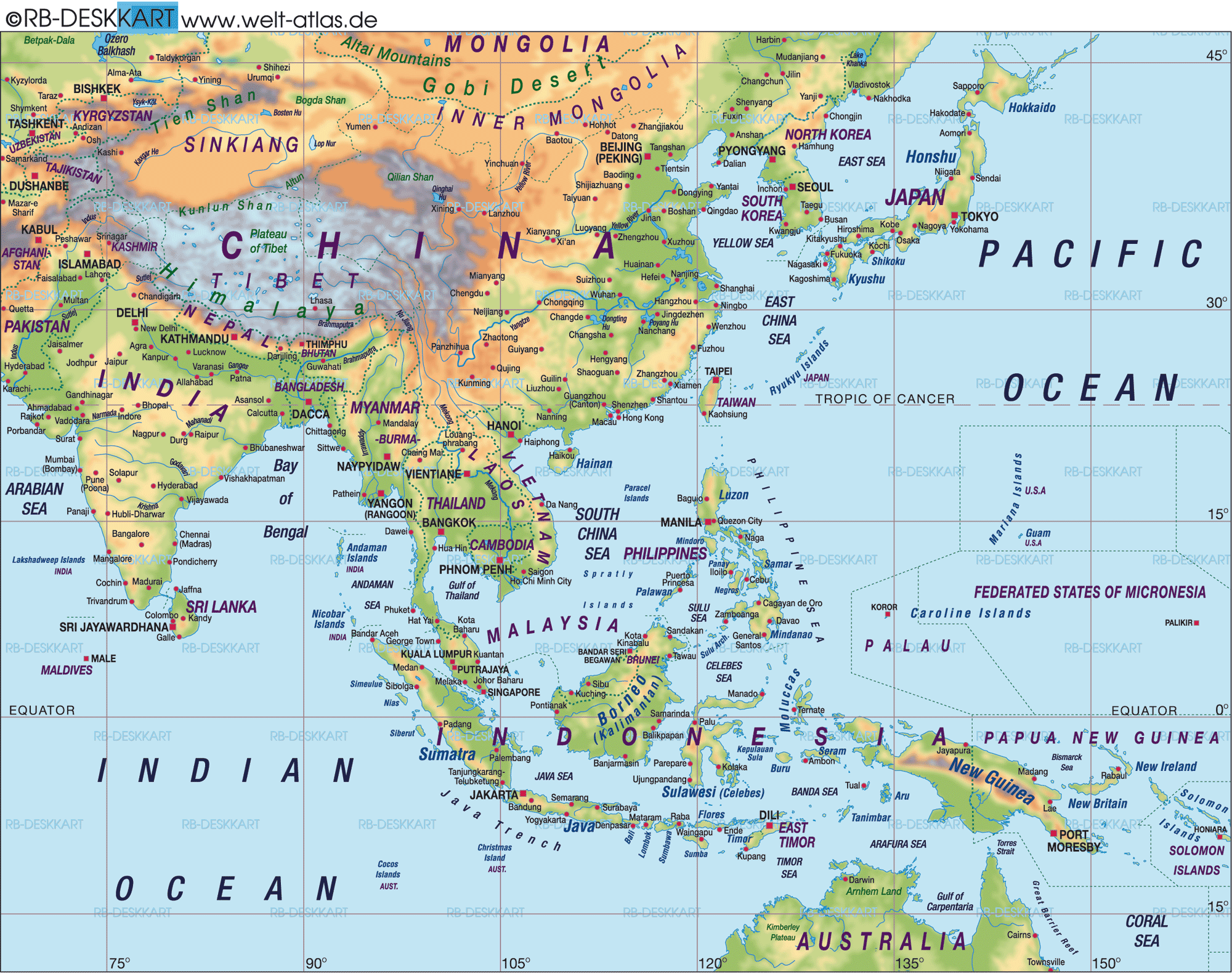


Asia Wétan

Asia Wétan nyaéta hiji sub-wewengkon di Asia nu bisa didefinisikeun boh sacara geograpis atawa sacara budaya. Sacara géografis, Asia Wetan ngawengku kurang leuwih 12,000,000 km², atawa 28% tina buana Asia sarta 15% leuwih gedé ti batan aréa Eropa. Leuwih ti 1.5 miliar jalma, kurang leuwih 40% populasi Asia atawa saparapatna jumlah jalma sadunya, nu hirup di Asia Wétan géografis, kurang leuwih dua kalieun populasi Eropa. Wewengkon ieu mangrupa salah sahiji tempat pangramena sadunya. Kapadetan populasina 130 per km², tilu kalieun rata-rata sadunya.
 |
Artikel ieu keur dikeureuyeuh, ditarjamahkeun tina basa Inggris. Bantuanna didagoan pikeun narjamahkeun. |
Culturally, it embraces those societies that have long been part of the Chinese cultural sphere:
- displaying héavy historical influence from the Classical Chinese language (including the traditional Chinese script),
- Confucianism and Neo-Confucianism,
- Mahayana Buddhism/Zen-Chan Buddhism,
- and Taoism (Daoism).
This combination of language, political philosophy, and religion (as well as art, architecture, holidays and féstivals, etc.) overlaps with the géographical designation of éast Asia for the most part, with a few exceptions, such as the overseas Chinese (including those in Singapore, Malaysia, Vietnam, and the West).
éast Asia and éastern Asia (the latter form preferred by the United Nations) are both more modérn terms for the traditional Européan name the Far East, which describes the region's géographical position in relation to Europe rather than its location within Asia. However, in contrast to the United Nations definition, éast Asia commonly is used to refer to the éastern part of Asia, as the term implies.
Other uses of the term East Asia[édit | édit sumber]
| Asia Wétan | |||||||||||||||||
|---|---|---|---|---|---|---|---|---|---|---|---|---|---|---|---|---|---|
|
| |||||||||||||||||
| Geographical East Asia | |||||||||||||||||
|
| |||||||||||||||||
| Geographic East Asia shaded in dark green, cultural and other possible definitions shaded in light green | |||||||||||||||||
| Nama Tionghoa | |||||||||||||||||
| Hanzi tradisional: | 東亞 | ||||||||||||||||
| Hanzi basajan: | 东亚 | ||||||||||||||||
| |||||||||||||||||
| Ngaran Jepang | |||||||||||||||||
| Kanji: | 東アジア | ||||||||||||||||
| Kana: | ひがしアジア | ||||||||||||||||
| |||||||||||||||||
| Ngaran Koréa | |||||||||||||||||
| Hangul: | 동아시아 | ||||||||||||||||
| Hanja: | 東亞細亞 | ||||||||||||||||
| |||||||||||||||||
| Ngaran Mongolia | |||||||||||||||||
| Mongolia: | Зүүн Ази ᠵᠤᠨ ᠠᠵᠢ Züün Azi | ||||||||||||||||
.PNG)

All the countries in éastern Asia: the countries of Southeast Asia and éastern Siberia.
The following political entities are commonly seen as located in géographic éast Asia:
 Républik Rahayat Tiongkok (including the Special Administrative Regions of
  Hong Kong and Citakan:MAC)
 Républik Tiongkok (Taiwan) (Taiwan)
 Jepang
- Citakan:PRK
 Koréa Kidul
- Citakan:MNG


The following péoples or societies are commonly seen as being encompassed by cultural éast Asia:
- Chinese society (including the predominantly Chinese regions outside China proper, such as Singapore and Taiwan)
- Japanese society
- Korean society
- Mongolian society
- Vietnamese society
Some consider the following countries or regions as part of éast Asia, while others do not. Disagreements hinge on the difference between the cultural and géographic definitions of the term. Political perspective is also an important factor. In descending order in terms of the frequency with which they are described as East Asian:
- The parts of China that are not historically dominated by Han Chinese: Qinghai, Tibet, Xinjiang (considered either éast Asia or Central Asia or South Asian in the case of Tibet[1][2][3][4][5][6]—here the primary question is cultural, with géography also at issue)
 Malaysia (considered either éast Asia or Southeast Asia—here the primary question is géographic)
- Citakan:MNG (considered either éast Asia or Central Asia—here culture and/or géography may be at issue)
- Citakan:SGP (considered either éast Asia or Southeast Asia—here the primary question is géographic)
 Viétnam (considered either éast Asia or Southeast Asia—here the primary question is géographic)
 Russian Far East (considered either éast Asia or North Asia—here the primary question is political, with culture and géography also at issue)


In infrequent circumstances, the term East Asia is purposefully used to include all countries in Southéast Asia, especially when used in dualism with the term West Asia, the latter of which is then used to include those regions commonly considered West Asia, Central Asia and Southwest Asia.
Sub-wewengkon lianna di Asia[édit | édit sumber]
- Asia Tenggara
- Asia Kidul
- Asia Tengah
- Southwest Asia or West Asia (One definition of the Middle East is synonymous with Southwest Asia)
- North Asia (Siberia)
- Northern Eurasia (Extends into part of Europe)
- Central Eurasia (Extends into part of Europe)
Tempo oge[édit | édit sumber]
- East Asian studies
- Asian Network of Major Cities 21
- East Asian languages
- East Asian calligraphy
- Four Asian Tigers – a label pertinent to the recent economic history of the region.
- East Asia Summit
- History of East Asia
- Indosphere
- Sinosphere
- East Asian Community
- Russian Far East (éast Asia north of this aréa)
Rujukan[édit | édit sumber]
- ↑ Center for South Asia Studies: University of California, Berkeley Archived 2008-06-21 di Wayback Machine
- ↑ Center for South Asia Outreach UW-Madison Archived 2010-02-27 di Wayback Machine
- ↑ Department of South Asia Studies: University of Pennsylvania Archived 2008-03-04 di Wayback Machine
- ↑ South Asia Language Resource Center: The University of Chicago
- ↑ AIIS Advanced Language Programs in India Archived 2009-06-17 di Wayback Machine
- ↑ Tibet is located on the Tibetan Plateau which is in Central Asia .[1]
Tumbu kaluar[édit | édit sumber]

Wewengkon di Dunya
| |||||||||||||||||||||||||
|---|---|---|---|---|---|---|---|---|---|---|---|---|---|---|---|---|---|---|---|---|---|---|---|---|---|
|
| ||||||||||||||||||||||||
| Tingali ogé Buana | |||||||||||||||||||||||||